
Structural Crack Surveys in Hertfordshire
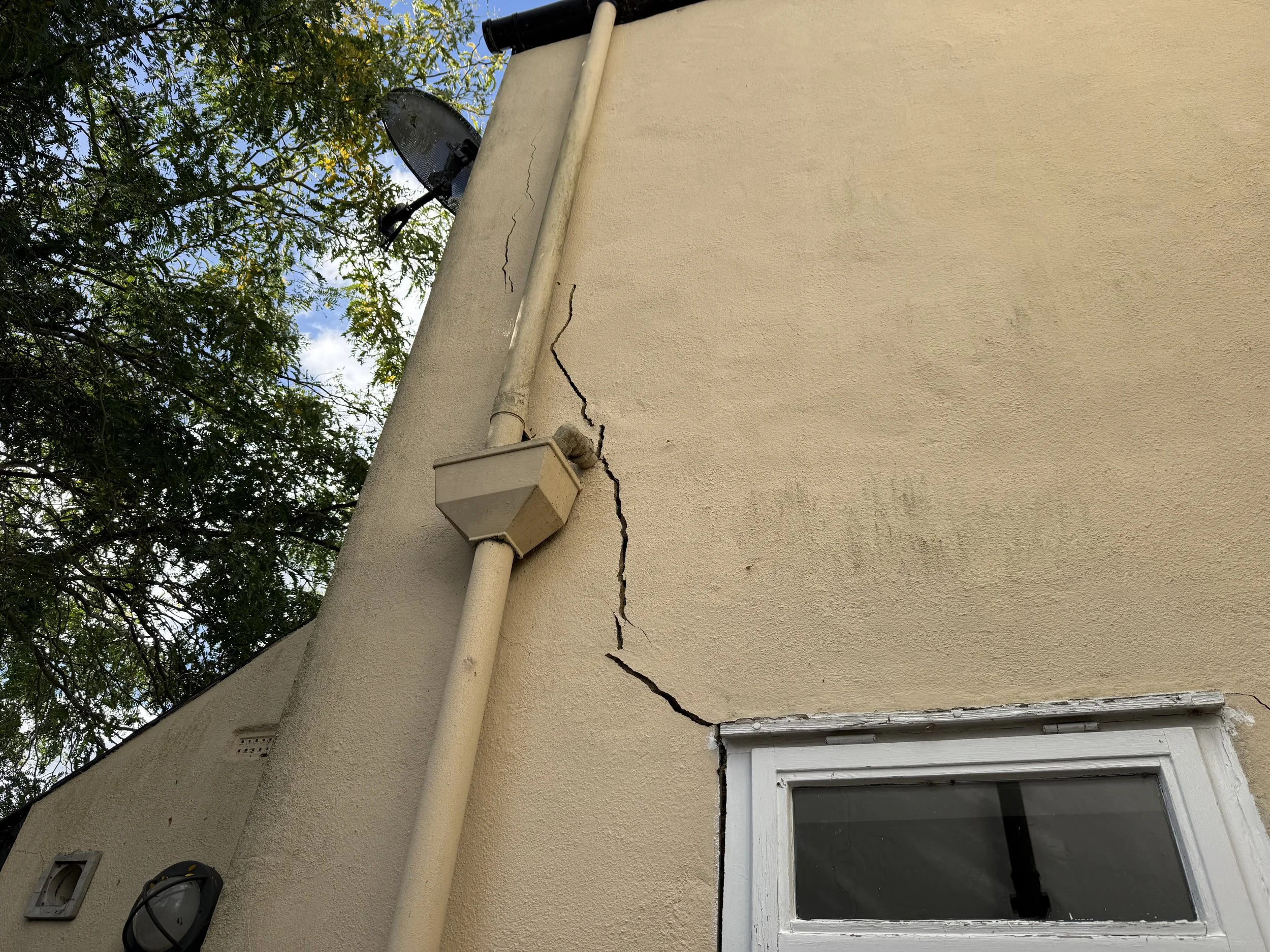
Concerned about cracking or movement to your property?
Lawson Cook Limited is a structural engineering practice based in Hertford. We carry out site surveys and reporting for cracking, suspected structural movement and potential subsidence to residential properties throughout Hertfordshire, Essex and North London.
Our aim is to establish the likely cause of the cracking, whether it is structurally significant, and what remedial works or further investigation may be required.
What Does a Structural Crack Survey Include?
During the survey we typically consider:
the location, direction and width of visible cracking;
whether cracking appears historic, progressive or potentially active;
the structural form and approximate age of the property;
foundations and ground conditions where these can reasonably be established;
nearby trees and vegetation;
drainage and indications of leakage or washout;
lintels, loadbearing walls and previous structural alterations;
distortion to masonry, floors, doors and windows;
evidence of previous repairs or repointing; and
whether further investigation, crack monitoring or opening-up is recommended.
Our surveys are normally visual and non-intrusive unless opening-up or further investigation has been specifically agreed beforehand.
Does Cracking Mean My Property Has Subsidence?
No. Cracking can result from a wide range of causes and subsidence is only one possibility.
Properties naturally experience some movement throughout their life. Cracks can develop due to drying shrinkage, thermal movement, differential settlement, alterations, inadequate lintels, drainage defects or deterioration of the building fabric.
Subsidence generally refers to downward movement of the ground supporting the foundations. The significance of any cracking therefore needs to be considered alongside the pattern of movement, construction of the property, local ground conditions and any potential contributing factors.
A structural survey can help establish whether the cracking is likely to be cosmetic, historic or indicative of a more significant structural issue.
Can Drainage Problems Cause Cracking
Defective or leaking drainage can sometimes contribute to foundation movement, particularly where water is escaping into the ground close to foundations.
During our survey we consider the position of visible drainage and any evidence that a drainage defect could be contributing to the observed cracking.
Where appropriate, we may recommend a drainage CCTV survey or further investigation before structural repairs are undertaken.
Structural Crack Surveys Across Hertfordshire
Lawson Cook Limited is based in Hertford and carries out residential structural surveys and cracking investigations throughout Hertfordshire and surrounding areas.
We regularly work in Hertford, Ware, Welwyn Garden City, St Albans, Stevenage, Hoddesdon, Broxbourne, Bishop's Stortford and surrounding Hertfordshire towns, together with Harlow, Epping, Essex and North London.
If your property is outside these areas, please contact us as we regularly travel further afield depending on the nature of the enquiry.
Worried About Cracks in Your Property?
Cracks to a property can occur for many reasons and do not necessarily indicate a serious structural problem. They may be associated with normal thermal or shrinkage movement, historic settlement, alterations to the building, defective lintels, drainage problems, tree-related movement or foundation movement.
However, where cracking is progressive, unusually wide, diagonal, present internally and externally, or associated with distortion to doors, windows or floors, it is sensible to have the property assessed by a structural engineer.
Lawson Cook regularly investigates cracking and suspected movement to residential properties. Our assessment focuses specifically on the structural behaviour of the building rather than providing a general building survey.
What Happens After the Survey?
Following our site visit, we provide a written structural report setting out our observations, conclusions and practical recommendations.
Where the cracking does not appear structurally significant, we will explain why and advise on any appropriate repairs or monitoring.
Where movement or another structural defect is suspected, we will set out what we believe is causing the problem and what should happen next. This may include drainage investigations, trial holes, soil testing, crack monitoring or the design of structural remedial works.
Our aim is to give you a clear understanding of the issue and a practical route forward rather than simply identifying that cracking exists.
Trees, Clay Soil and Structural Movement
Many properties across Hertfordshire, Essex and North London are founded on clay soils. Clay can change volume as its moisture content varies, and nearby trees can influence those moisture levels.
This does not mean that every tree close to a property will cause structural movement. The species, maturity and distance of the tree, foundation depth, soil conditions and history of the property all need to be considered.
Where tree-related movement is suspected, further investigation may be required before a definitive conclusion can be reached.
Structural Engineer or Building Surveyor?
Lawson Cook are structural engineers rather than general building surveyors.
If your concern relates specifically to cracking, structural movement, foundations, loadbearing walls or another structural defect, our assessment focuses on how the structure is behaving, the likely cause of the defect and whether structural repairs or further investigation are required.
We can also advise where structural design work is subsequently required, for example where a lintel, wall, foundation or other structural element needs to be repaired or replaced.